Thanks for the feedback
Authentic Leadership
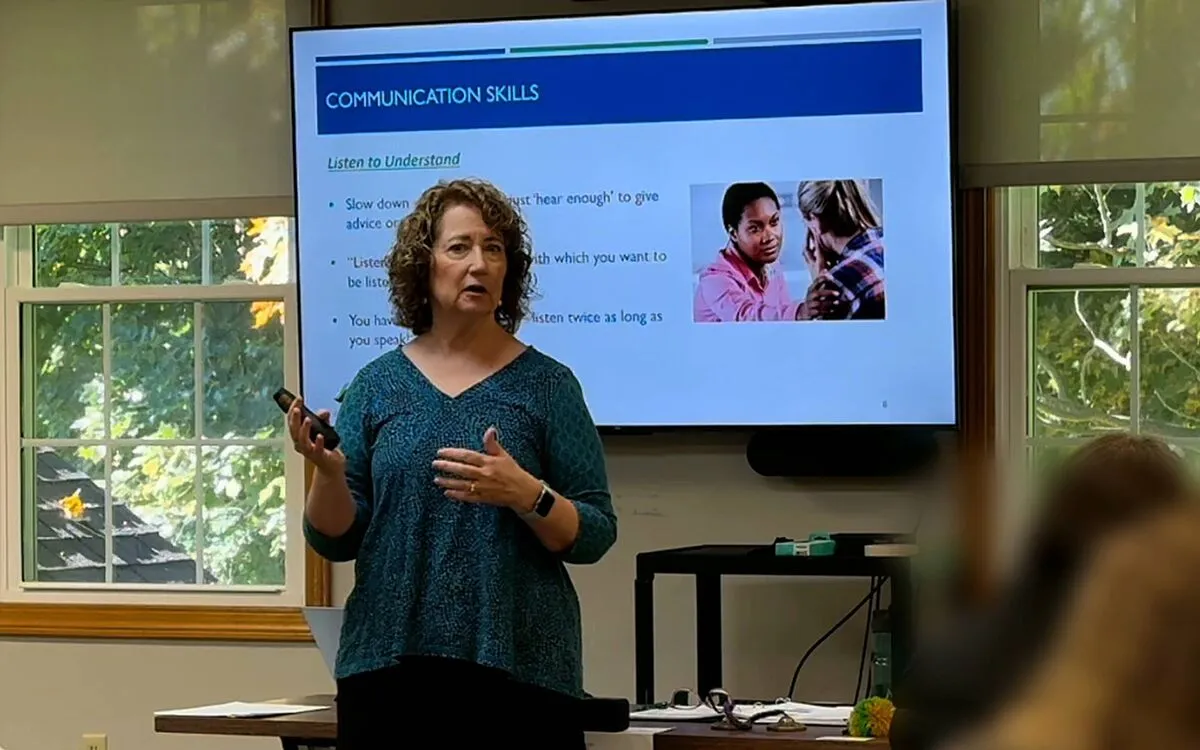
A few weeks ago, I taught a class to a large group of managers, and early on I could feel the tension from one participant.
When I facilitate, I introduce a topic and ask questions. I want to see what people already know and hear their experiences. Then I fill in the blanks with stories of my own along the way.
Most people like my stories.
Yet, on the second day of the class, this unhappy person got up and walked out of the room several times when I started to tell a story. I noticed her but didn't acknowledge it publicly, and I started telling myself a story about how she didn't like me.
Then during a two-minute body scan meditation, when everyone else was practicing breathing and mindfulness, she sat clicking away on her phone. I wondered what I could do to change her engagement with the material.
I went over during a break and tried to engage her as pleasantly as I could, but she was not interested. I could tell I wasn't going to get a good review.
I was right. But I thought she would just write it down on the evaluation. Yet, at the end of the day, when each person shared a main takeaway, she told the room that, unlike everyone else, she had gotten nothing out of the class. She said it felt like a big evaluation to her, and I had taught her nothing. Her written review said the same.
I wasn't surprised, but it still hurt.
In the moment, I simply said, "Thanks for the feedback," and we went on to the next person.
Then I felt bad about it and wondered what I did to deserve this horrible review. I also wondered about what was going on for her.
I'll admit I replayed her comments far longer than I replayed the thank-yous. Our minds hold on to the one sharp remark and let the kind ones slide right by.
Here's what helped. I called a friend on my way home and vented to her, then to Paul when I got home. They were kind about how I must have felt hearing that in front of everyone.
The next day, I called my boss who had given me the gig, and I spent 30 minutes talking it through with her. She mirrored back my good qualities and told me to move on.
And then I was able to let it go.
I often remind managers that, "You can't please all the people all the time." Then I ask, "Are YOU responsible for other people's perceptions of you?"
That question always sparks a lot of discussion. It's much easier to ask in a classroom than to answer on the drive home.
Here's what I see now. I knew almost nothing about her. I didn't know what she carried into that room. The phone could have been boredom, or a problem at work, or something at home. Walking out could have been disinterest, or something I will never know.
I made up a story about her from what I saw. Then she made up one about me from what she saw. Neither of us had the whole picture.
That is what authentic leadership looks like to me. Being who you are, to serve the greater good.
I'm the same facilitator for the people who thank me and for the person who don't. If I had changed my style to win her over, I would have shortchanged everyone else in the room, and it wouldn't have worked anyway.
When I reflect on this, I want to always remember:
Keep the whole room in view. Three people stayed to thank me, and the rest of the feedback was excellent. One loud voice is only one voice.
Don't carry it alone. A call and a 30-minute conversation did more for me than hours of replaying it by myself.
Behavior is what you see. The reason is what you don't. Before you decide what someone's reaction says about you, remember you have no idea what might be going on in their life.
Hear it, then let it go. Reflect, process, take what's useful. Let the rest go.
Be who you are. Pleasing everyone has never worked for anyone, so I'd rather be myself and let the people who want what I have get what I can give.
Some people will be unhappy no matter what you do. The work is staying yourself anyway.
Where are you bending yourself to win over someone who may never be won?
All my best,
Maureen
“Most people do not listen with the intent to understand; they listen with the intent to reply.”~Stephen Covey